
If you work with aluminium windows, doors, or curtain walls, you already know that a clean, tight corner joint is what separates a professional product from an amateur one. That’s exactly the job of a corner crimping machine for aluminium profiles. This guide walks you through what the machine does, how it works, what it costs, and how to pick the right supplier — without the sales fluff.
What Is a Corner Crimping Machine for Aluminium Profiles?
An aluminium profile crimping machine joins two mitred aluminium bars at a 90-degree angle by pressing small metal pins (or “knuckles”) into pre-cut notches at the corner. The pressure fuses the two profile ends together, creating a joint that’s strong, seamless, and doesn’t need welding, screws, or adhesive.
This machine is a staple on any production line making:
- Aluminium window frames
- Aluminium door frames
- Curtain wall sections
- Shop-front and partition frames
- Cabinet and enclosure frames
If you’ve ever asked yourself how does a corner crimping machine work, the short answer is: hydraulic or pneumatic cylinders drive crimping pins into both profile ends at once, locking the mitred joint into a single rigid corner in a matter of seconds.
Types of Corner Crimping Machines
Not every workshop needs the same setup. Here’s how the main categories break down.
Pneumatic Corner Crimping Machine for Aluminium Profiles
A pneumatic corner crimping machine for aluminium profiles runs on compressed air. It’s the go-to choice for small to mid-sized fabrication shops because it’s affordable, easy to maintain, and fast enough for daily production runs without needing a heavy-duty power supply.
Hydraulic Corner Crimping Machine for Aluminium
A hydraulic corner crimping machine for aluminium delivers much higher crimping force, which makes it ideal for thicker, heavier-duty profiles used in commercial curtain walling or structural framing. If your profiles are thick-walled or high-strength alloy, hydraulic is usually the safer bet.
Automatic Corner Crimping Machine for Aluminium Profiles
An automatic corner crimping machine for aluminium profiles takes operator guesswork out of the equation. Load the profile, hit the cycle button, and the machine positions, clamps, and crimps on its own. These are common on high-volume lines where speed and repeatability matter more than upfront cost.
Single Head vs Double Head Machines
A single head corner crimping machine aluminium profiles crimps one corner at a time and suits smaller operations or custom fabrication. A double head corner crimping machine aluminium crimps both ends of a corner simultaneously, cutting cycle time roughly in half — a smart upgrade once your order volume grows.
Heavy Duty and Small Format Options
Fabricators working on large commercial jobs often look for a heavy duty aluminium profile corner crimping machine built for continuous, high-tonnage cycles. On the other end, a small corner crimping machine for aluminium profiles suits workshops with limited floor space or lower daily output, without sacrificing joint quality.
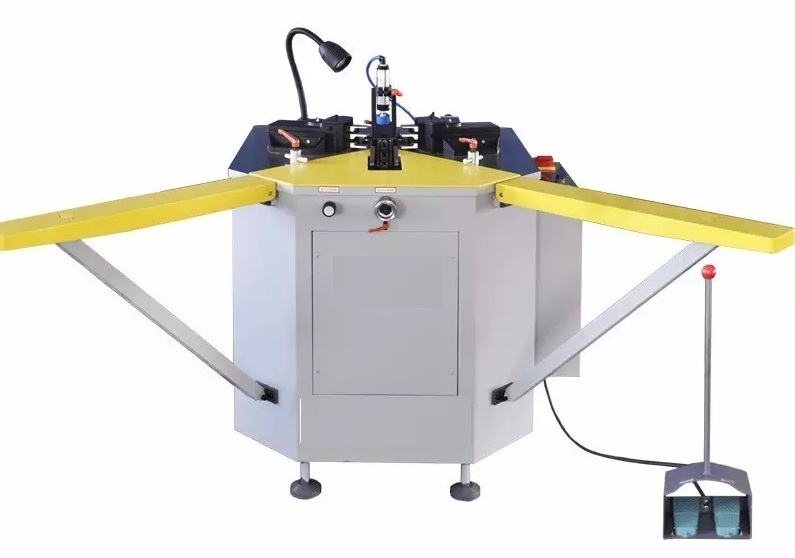
Where This Machine Is Used
The most common application is the aluminium window corner crimping machine and aluminium door frame crimping machine setup — both rely on the exact same crimping principle, just tuned to the profile thickness of windows versus doors. Beyond windows and doors, you’ll also find a corner crimping machine for aluminium windows and doors running side by side with combining and cutting machines on a single production line, plus a dedicated aluminium profile corner crimping machine for curtain wall on jobs involving large glazed façades.
How to Use an Aluminium Profile Crimping Machine
Wondering how to use aluminium profile crimping machine equipment on your shop floor? The general workflow looks like this:
- Cut and mitre the aluminium profile to size at 45 degrees.
- Load both profile ends into the machine’s clamps at the correct corner angle.
- Align the crimping notches with the machine’s pin locations.
- Trigger the crimping cycle — pneumatic or hydraulic pressure drives the pins into the joint.
- Release the clamps and inspect the corner for flush alignment.
Most suppliers include an operator manual with the unit. If you’re troubleshooting a specific fault, an aluminium profile corner crimping machine manual or the manufacturer’s aluminium profile corner crimping machine troubleshooting guide should be your first stop before calling for service.
Corner Crimping Machine for Aluminium Profiles: Specifications to Check
Before you buy, compare the corner crimping machine for aluminium profiles specifications across a few brands. Key numbers to look at:
- Crimping force (measured in tons or kN)
- Maximum and minimum profile size the machine accepts
- Cycle time per corner
- Power requirement (electric, pneumatic air pressure, or hydraulic pump specs)
- Table/frame construction and machine weight
- Number of crimping heads (single or double)
Ask your supplier for the full corner crimping machine for aluminium profiles specifications sheet in writing — reputable manufacturers won’t hesitate to provide it.
Corner Crimping Machine vs Corner Combining Machine
People often confuse these two, so it’s worth clearing up the corner crimping machine vs corner combining machine question. A crimping machine joins the corner using pressed pins. A combining machine, by contrast, typically uses screws or corner keys and a hydraulic press to hold the joint together mechanically. Crimping tends to give a cleaner, faster, more seamless finish, which is why it’s the preferred method for window and door frame production.
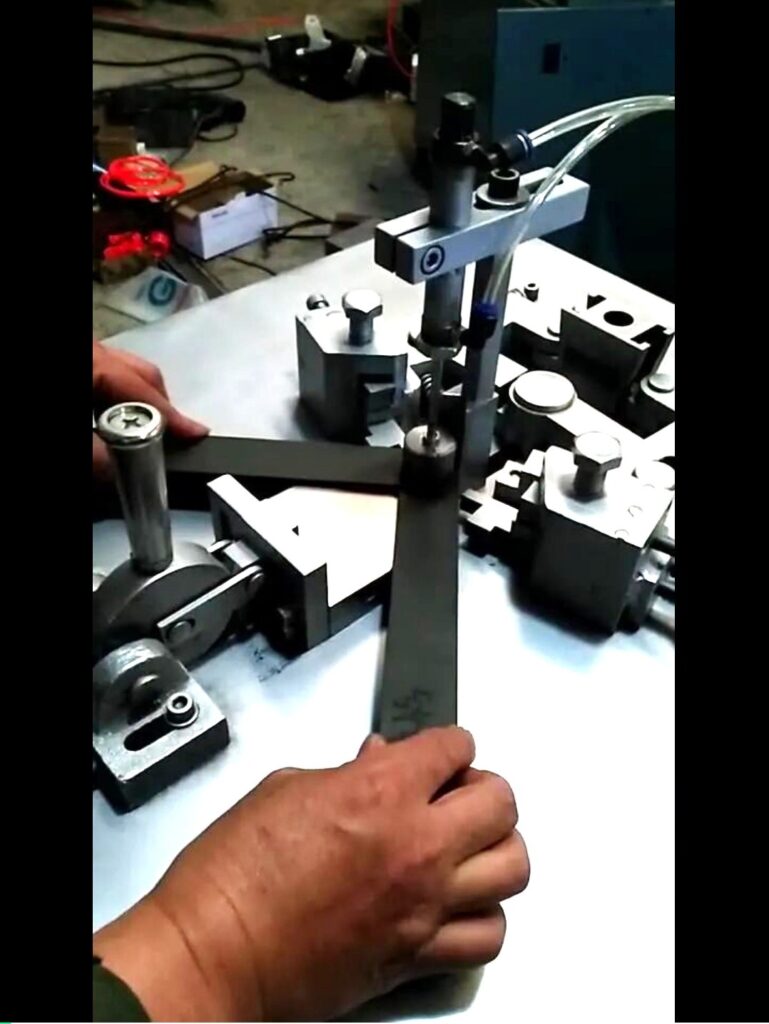
Aluminium Profile Crimping Machine Price: What to Expect
The aluminium profile crimping machine price varies quite a bit depending on type, force rating, and automation level. As a rough guide:
- Entry-level pneumatic single-head units sit at the lower end of the market.
- Hydraulic and double-head machines cost more due to higher force output and dual-crimping mechanisms.
- Fully automatic machines carry the highest price tag but cut labour costs significantly over time.
If you’re asking what is the cost of aluminium profile crimping machine equipment for your specific production volume, it’s worth requesting an aluminium profile corner crimping machine price list from two or three suppliers so you can compare like-for-like specs rather than just the sticker price.
Buying Guide: How to Choose the Best Machine
Here’s a practical aluminium profile crimping machine buying guide checklist before you commit:
- Match force to your profile thickness. Thin residential window profiles need less tonnage than commercial curtain wall sections.
- Check crimping head count. Double-head machines pay for themselves quickly at higher volumes.
- Look for a well-known aluminium profile corner crimping machine manufacturer with a track record, not just the lowest quote.
- Confirm after-sales support, including access to aluminium profile corner crimping machine spare parts and technical service.
- Read an aluminium profile corner crimping machine review or ask for references from existing customers before finalizing.
- Compare brands directly. A side-by-side aluminium profile corner crimping machine brand comparison often reveals differences in build quality that spec sheets alone won’t show.
Finding the Best Corner Crimping Machine for Aluminium Profiles
So what actually makes the best corner crimping machine for aluminium profiles for your business? It comes down to matching the machine to your production reality — not buying the biggest or most expensive unit available. A shop running short custom orders is usually better off with a compact pneumatic single-head machine. A factory running thousands of frames a month needs an automatic double-head hydraulic setup that can keep pace without operator fatigue.
Sourcing: Manufacturers, Suppliers, and Dealers
If you’re comparing an aluminium profile corner crimping machine manufacturer against a local aluminium profile corner crimping machine supplier, keep in mind that manufacturers typically offer better pricing and customization, while local suppliers offer faster delivery and easier servicing.
Many buyers specifically search for an aluminium profile crimping machine China manufacturer, since a large share of global aluminium fabrication equipment is produced there at competitive pricing, often including options for aluminium profile crimping machine wholesale orders and export through an aluminium profile crimping machine exporter.
That said, if you’d rather not deal with import logistics, searching corner crimping machine for aluminium profiles near me, aluminium profile crimping machine supplier near me, or corner crimping machine dealer near me will surface local options with shorter lead times and easier installation support.
Look for machines listed corner crimping machine for aluminium profiles for sale or aluminium profile corner crimping machine for sale online through verified industrial equipment marketplaces, and always confirm the seller’s corner crimping machine for aluminium profiles official website before making a payment, to avoid third-party resellers with inflated pricing.
Industrial and Commercial Applications
Beyond standard fabrication shops, an industrial corner crimping machine for aluminium profiles is a fixture in large-scale manufacturing plants producing framing systems for construction projects, factories, and commercial developments. These setups typically run alongside cutting saws, punching machines, and combining stations to form a complete aluminium fabrication line.
Learning More Before You Buy
If you’re new to this equipment, watching a corner crimping machine for aluminium profiles YouTube demo is one of the fastest ways to understand cycle time, noise level, and finished joint quality before committing to a purchase. Pair that with the manufacturer’s aluminium profile corner crimping machine installation guide so you know exactly what floor space, power, and air supply the machine will need on-site.
Final Thoughts
A corner crimping machine for aluminium profiles is one of the most important investments you’ll make for aluminium window, door, or curtain wall production. Take time to compare specifications, request a genuine price list, check reviews, and choose a manufacturer or supplier that stands behind their equipment with real after-sales support. Get that right, and you’ll have a machine that produces clean, strong corner joints for years of production.