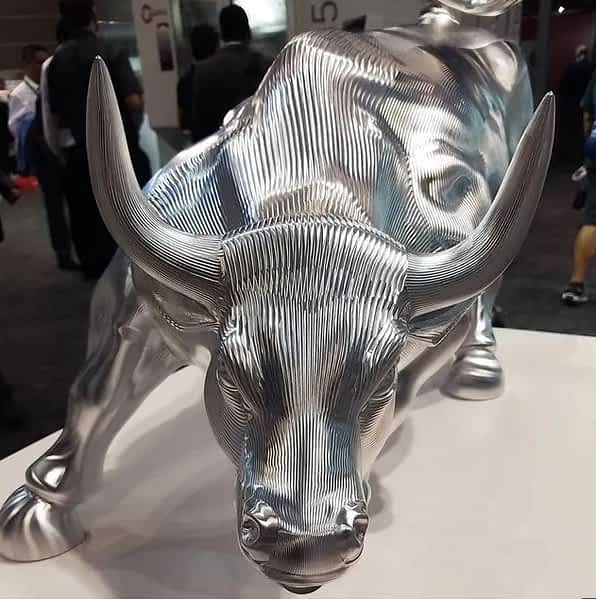
CNC machining is the manufacturing and processing of parts and products under computer control.
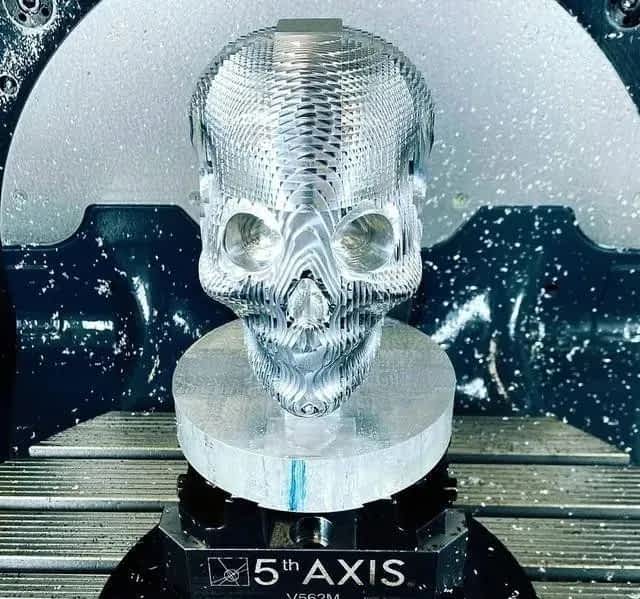
CNC machining involves the use of Computer Numerical Control (CNC) machines to shape and resize a piece of material, i.e., the workpiece, by automatically removing it. Typically, the material used is plastic or metal, and when the removal is complete, the finished product or product is already produced.
This process is also known as subtractive manufacturing. For CNC machining, computer applications are used to control the movement of machine tools.
Common types of CNC machine tools
The CNC machining process includes the most common milling and turning, followed by grinding,EDMetc.
Milling
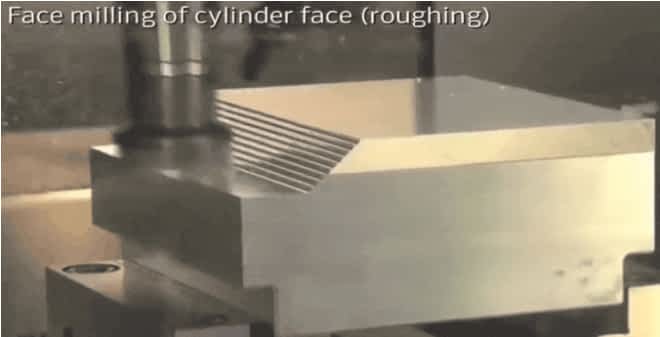
Milling is the use of a rotating tool on the surface of the workpiece, moving along 3, 4 or 5 axes. Milling is basically cutting or trimming a workpiece that can quickly create complex geometries and precision parts from metal or thermoplastics.
car
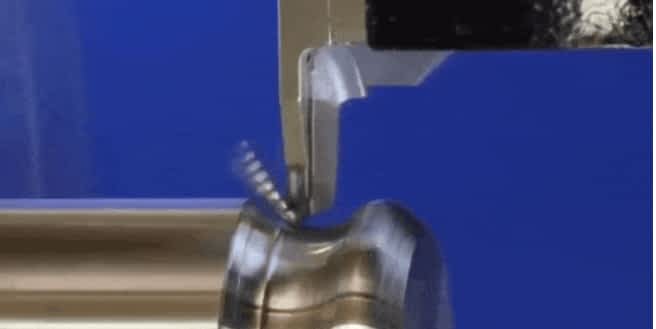
Turning is the use of a lathe to create parts that contain cylindrical features. The workpiece rotates on an axis and comes into contact with the precision turning tool, creating rounded edges, radial and axial holes, grooves and grooves.
Advantages of CNC machining
Compared with traditional manual machining, CNC machining is much faster. As long as the computer code is correct and in line with the design, the finished product has high dimensional accuracy and small error
CNC manufacturing is ideal for rapid prototyping manufacturing. It can also be used to manufacture end-use products and components, but is often only cost-effective in short-run production runs in low volumes.
Multi-axis CNC machining
CNC milling involves removing material using a rotating tool. Either the workpiece remains stationary and the tool moves onto the workpiece, or the workpiece enters the machine at a predetermined angle. The more axes a machine moves, the more complex and faster its shaping process becomes
3-axis CNC machining
Three-axis CNC milling remains one of the most popular and widely used machining processes. In 3-axis machining, the workpiece remains fixed and the rotating tool cuts along the X, Y, and Z axes. This is a relatively simple form of CNC machining that manufactures products with simple structures. It is not suitable for machining complex geometries or products with complex components.
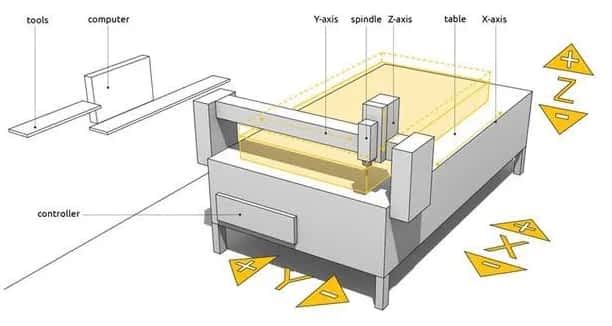
Since it can only cut in three axes, machining speeds can also be slower than four- or five-axis CNC because the workpiece may need to be manually repositioned to achieve the desired shape.
4-axis CNC machining
In four-axis CNC milling, a fourth axis is added to the cutting tool’s movement, allowing it to rotate around the x-axis. There are now four axes – x, y, z, and a axis (rotating around the x-axis). Most four-axis CNC machines also allow the workpiece to rotate, which is known as the B-axis, so that the machine can act as both a milling machine and a lathe.
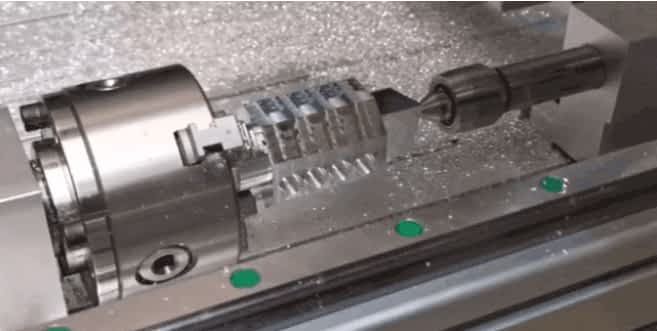
If you need to drill holes in the side of a part or in the curved surface of a cylinder, 4-axis CNC machining is the way to go. It greatly speeds up the machining process and has a high machining accuracy.
5-axis CNC machining
Five-axis CNC milling has an additional axis of rotation compared to four-axis CNC. The fifth axis rotates around the y-axis, also known as the b-axis. The workpiece can also be rotated on some machines, sometimes referred to as the B-axis or C-axis.
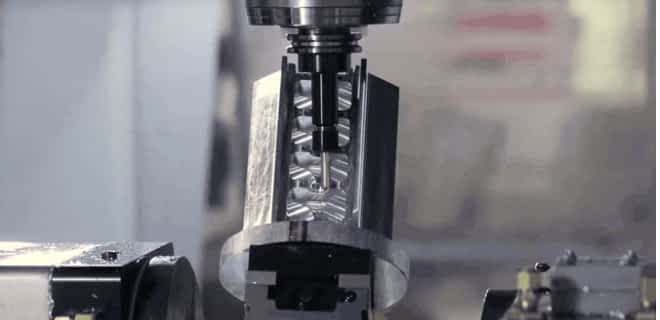
Due to the high versatility of 5-axis CNC machining, it is used to manufacture complex precision parts. For example, medical parts of artificial prostheses or bones, aerospace parts, titanium parts, oil and gas mechanical parts, military products, etc.